
About Honey Acres
Honey Acres is a Wisconsin-based maker of fresh, unfiltered, raw and unprocessed honey products, crafted in an allergen-free facility with an on-site honey museum, retail store, and production floor.


Our Story
From our home in rural Neosho, Wisconsin, we produce honey the way nature intended — raw, unfiltered, and unprocessed — so every jar keeps the flavor and goodness of the hive.

Driven by Tradition
Our roots reach back to 1852, when Christian Friederich Diehnelt emigrated from Germany to Wisconsin. Five generations later — including the Gabrielian family, who joined in 2007 — we still tend our craft on 40 acres between Milwaukee and Madison.

Driven by Family
We are a family-operated business, and it shows in everything we make. Every member of our team takes pride in crafting honey products our customers can trust.
174 years, five generations
Every jar carries a story that started in 1852. Here's how it unfolded.
A beekeeper leaves Rosswein
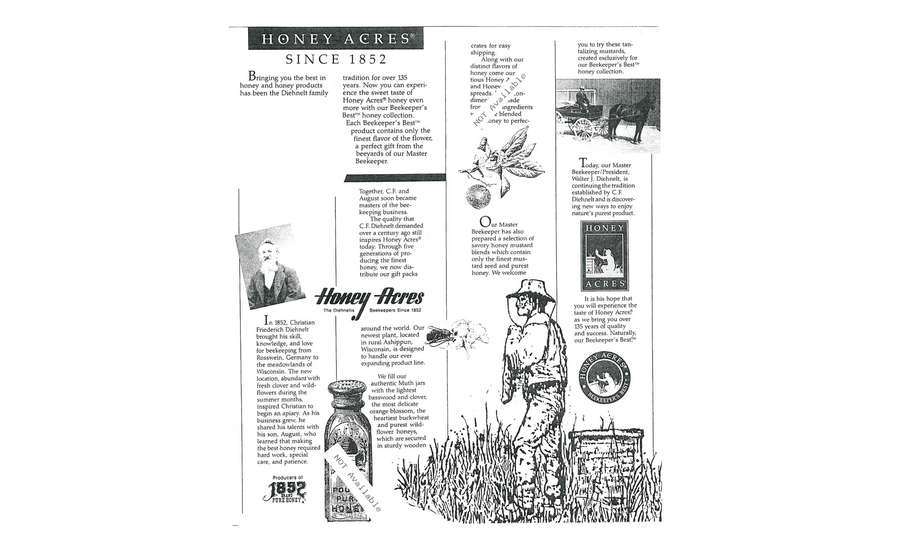
Christian Friederich Diehnelt sailed from Rosswein, Germany to Milwaukee with his beekeeping skill and not much else. The Wisconsin meadowlands were thick with clover and linden. He set up his first hives and started the only business his family has ever been in.
C.F. also runs a wool carding mill at what is now Roosevelt Dr. and Fond du Lac Ave. in Milwaukee, then a farm — today a residential neighborhood.
Linden Apiary
C.F.'s son August turned the hives into a trade and named the beeyard after the linden trees whose nectar gave the honey its flavor. He learned from his father that good honey takes hard work, particular care, and patience. That is still the whole method.
Honey by horse and wagon
August and his son Walter filled stone crocks and delivered them to Milwaukee customers by horse and wagon.
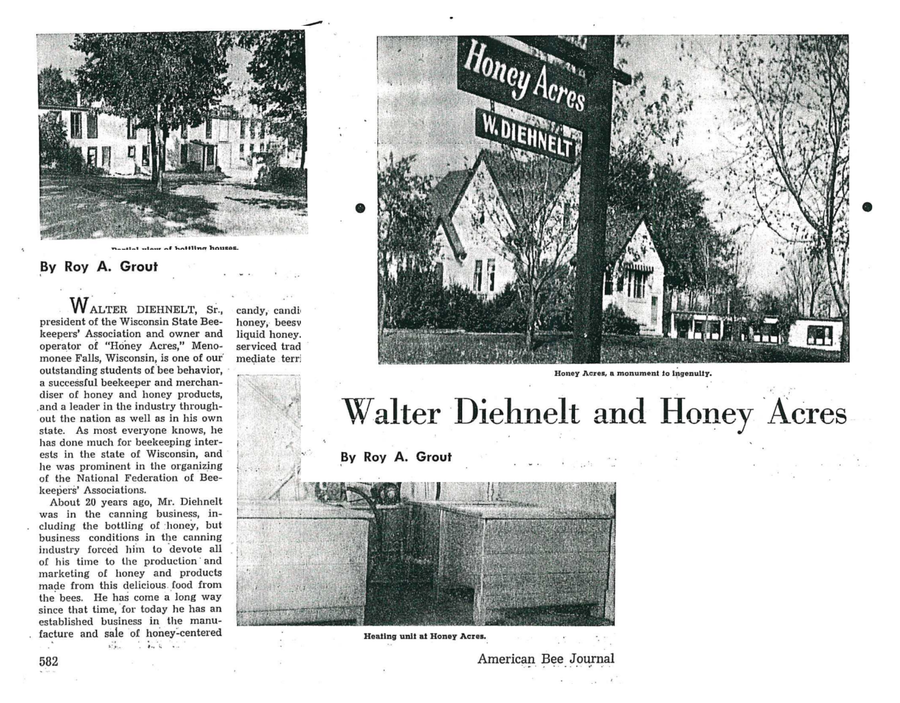
Walter Diehnelt Sr. is in the canning business, bottling honey alongside other goods. Conditions in canning push him to honey full time.
The name Honey Acres
Walter gave the business the name it still carries and moved production to an eight-acre site at Menomonee Falls. It stayed there for half a century.
A starter that never stopped
The first batch of honey cream was seeded in the 1930s, and a little of every batch since has been held back to start the next one. The cream we jar today traces back in an unbroken line to that first one. Walter Sr. also begins making the honey mint candy.
The State Fair years
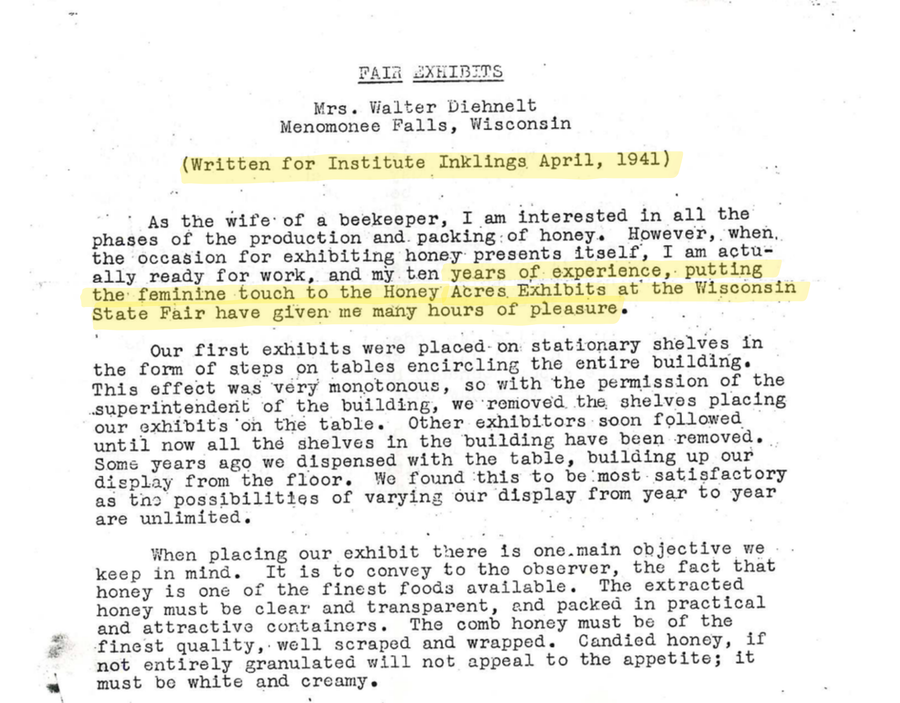
By 1941 Mrs. Walter Diehnelt had spent ten seasons building the Honey Acres exhibit at the Wisconsin State Fair, one year with a glass-sided hive so visitors could watch a live colony work. Her aim, in her own words, was to show that honey is one of the finest foods available.
A dry hive
Walter and his son Walter J. spent years under a microscope tracing Nosema disease to moisture trapped in the hive, and designed an insulated, ventilated cover to solve it. Their conclusion became a saying in the family: give me a dry hive and I will never worry about Nosema.
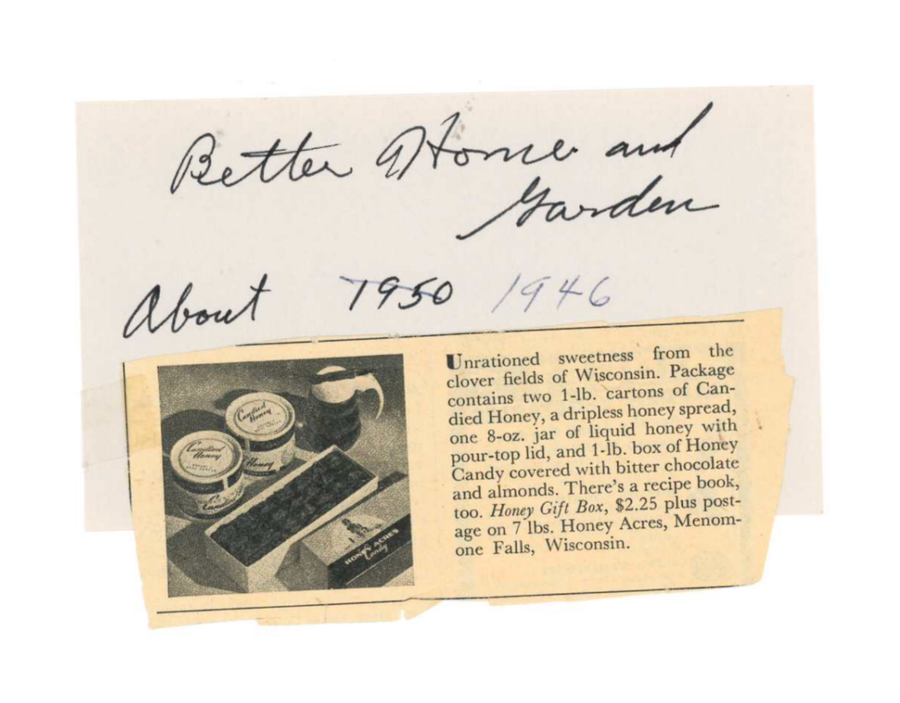
Wartime honey. Beeswax goes to war production; gift boxes are advertised as unrationed sweetness from the clover fields of Wisconsin.
Unrationed sweetness
A Honey Acres gift box ran in Better Homes and Gardens for $2.25: candied honey, liquid honey, honey candy covered in bitter chocolate and almonds, and a recipe book. The ad called it unrationed sweetness from the clover fields of Wisconsin.
Walter Sr. serves as superintendent of the bee exhibit at the Wisconsin Centennial Exposition — a past president of the Wisconsin State Beekeepers Association who helped organize the National Federation of Beekeepers Associations.
1,300 colonies and about 8 million bees, with roughly 25 people employed in winter — filling a five-carload USDA order for the national school lunch program.
Record harvest: 250 pounds of honey per hive — never matched since.
The Muth jar
Walter J. came across a Muth honey jar from the 1800s, square-shouldered with a round lip, and had the mold reproduced. It became the shape of every Honey Acres gift pack and carried the honey into gourmet shops from coast to coast. That year: 1,787 colonies at 36 locations and a harvest of 198,000 pounds.
Home to Ashippun
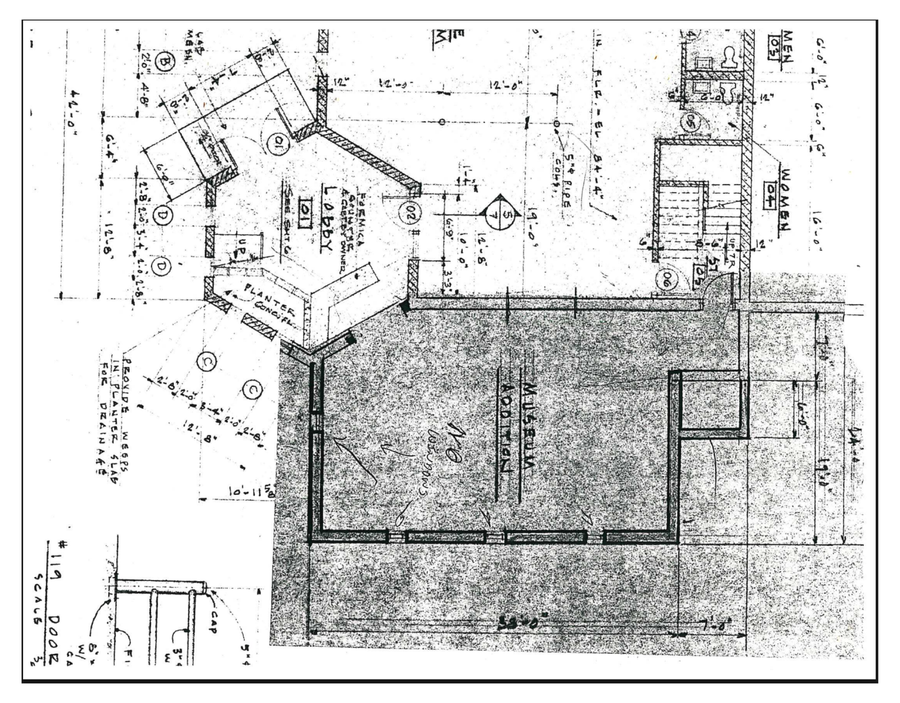
Outgrown in Menomonee Falls, the family built a new plant on their own farmland north of Ashippun, two miles up Highway 67. Extraction started there first, and the bottling line followed.
Honey of a Museum
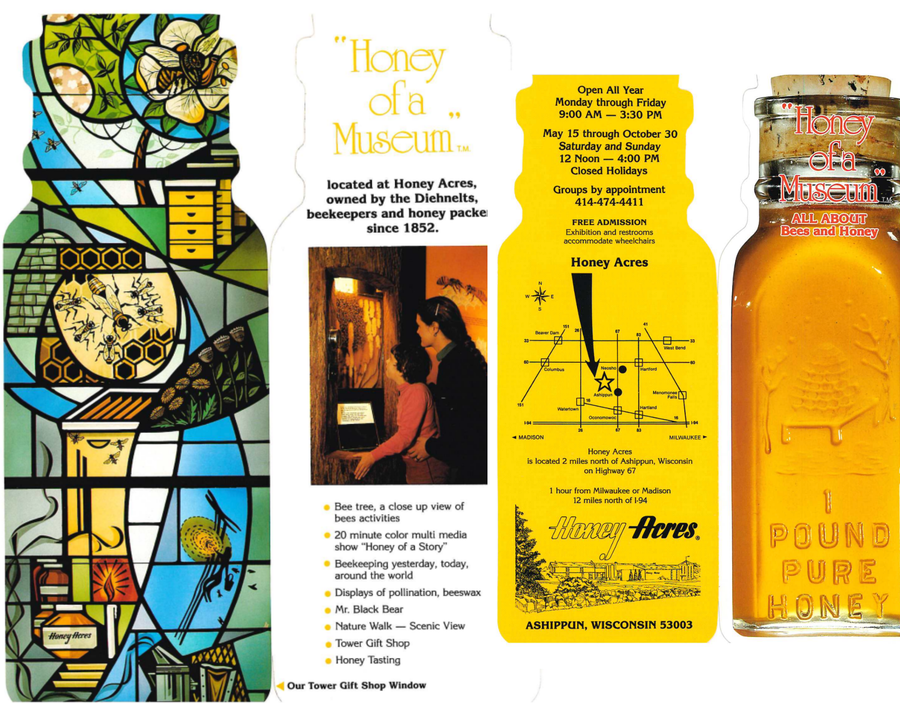
The family opened a museum next to the plant: a live bee tree cut half inside and half out, hives from England, Japan, Africa and Lebanon, an 1890 workroom, and a stained glass window telling the beekeeping story. Admission was free, and it stayed free.
Six sides
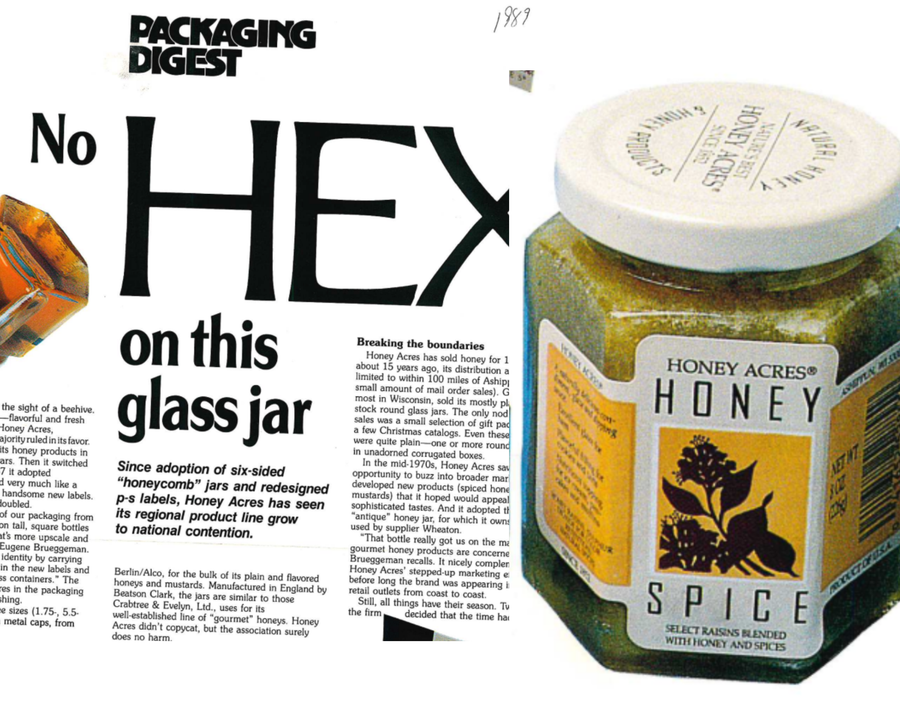
Honey is made in six-sided cells, so the honey went into a six-sided jar. The honeycomb jar doubled the customer base within a year.
Walter J. wins first place for comb honey at the North American Honey Show in Mobile, Alabama — a national blue ribbon.
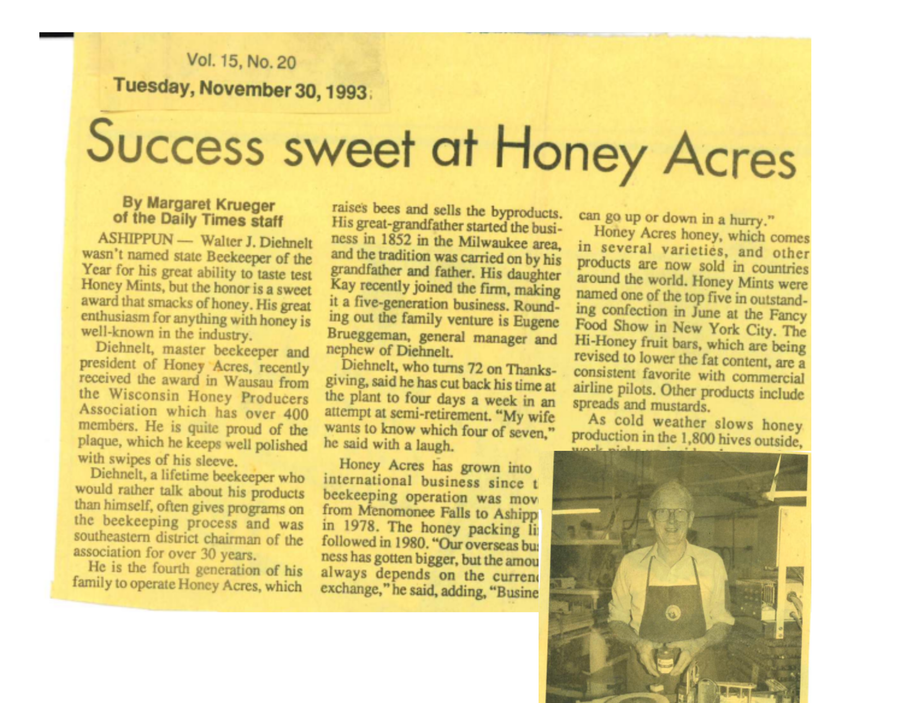
Walter J. is named Wisconsin Beekeeper of the Year. Daughter Kay Diehnelt joins, making it a five-generation business alongside nephew Eugene Brueggeman.
Honey Mints are named one of the top five confections at the Fancy Food Show in New York, and Honey Acres wins The Gourmet Retailer's Best of Aisle. Walter J. travels to Voronezh, Russia to help the newly privatized Diana Honey Company.
Over one million pounds of honey shipped a year, sold in all 50 states plus Japan, Germany and Korea — stocked by Macy's, Bloomingdale's, Marshall Field's and Neiman Marcus.
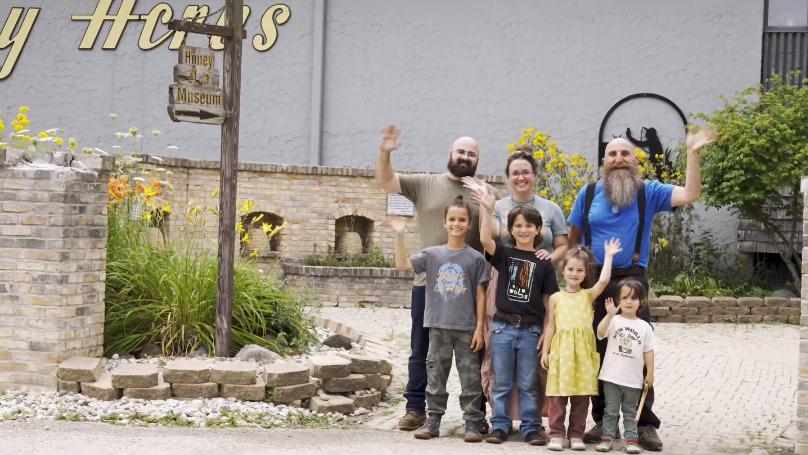
Five generations on
Over 170 years after C.F. set his first hives, the family is still keeping bees and still packing honey the way he insisted: strained, never filtered, so the pollen stays in. Satisfaction is guaranteed today just as it was in 1852.